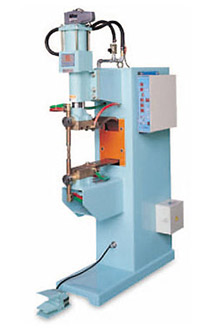
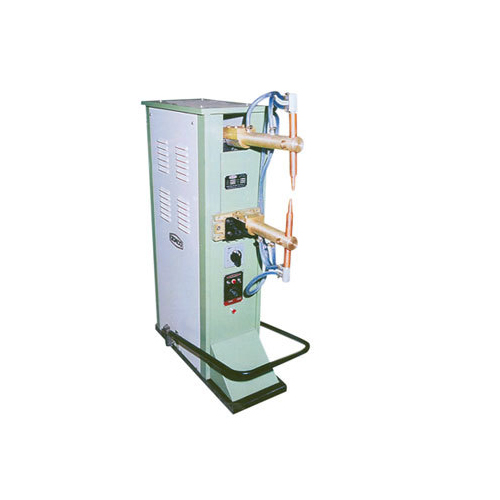
Spot Welding Machine | Reliable Spot Welding Equipment Manufacturer In Mumbai
Spot welding machines (also known as resistance spot welders) are specialized equipment designed to join overlapping metal sheets, studs or components by applying high current through electrodes and pressure over a small “spot”.
At Indian Trade Bird, we partner with verified Spot Welding Equipment Manufacturers and suppliers across India. Our portal facilitates easy comparison of models, specifications and vendor details—helping buyers choose the best spot welder for their industrial or precision production needs.
Key Features & Advantages
• Rapid weld cycle: Generates a weld in milliseconds by controlling current, time and pressure.
• Minimal distortion: Limited heat-affected zone owing to concentrated current at a small point.
• Suitable for sheet metal & assemblies: Ideal for automotive bodies, battery modules, structural panels.
• Versatility & automation: Available as bench-type, robot-integrated or portable spot welder variants.
• Efficient energy usage: Because the current is concentrated and the weld time short, less power is wasted.
Applications
• Welding of overlapping sheet metal panels – widely used in automotive body construction.
• Manufacture and assembly of battery packs (e.g., nickel strips to 18650/26650 cells) for energy storage.
• Stud, nut or fastener welding onto metal plates for structural and electrical assemblies.
• Fabrication and repair of metal furniture, wire mesh and other perforated sheet metal products.
• Automated production lines where high-throughput, consistent spot welds are required.
How to Choose the Right Spot Welding Equipment
• Material & thickness compatibility: Define the metal types (steel, stainless, aluminum) and sheet thickness you’re welding.
• Electrode configuration & arm length: For high-production or large parts, tool geometry matters.
• Weld cycle time & duty rate: Match machine’s capacity to your required throughput and continuous operation.
• Control features & monitoring: Look for digital weld controllers, current/time monitoring, quality feedback systems.
• Support, tooling & consumables: Ensure manufacturer supplies replacement electrodes, arm components and offers servicing.
Why Buy via Indian Trade Bird
• Verified Manufacturers: Every listed manufacturer/supplier is vetted for reliability and performance.
• Wide Selection: Multiple spot welding machine models and configurations available in one portal.
• Indian Local Support: Suppliers based In Mumbai mean easier communication, faster logistics and local servicing.
• Detailed Listings: Access to full specification sheets, supplier profiles and direct contact allows informed decision-making.
Tips for Safe & Effective Operation
• Ensure electrode surfaces are clean and properly aligned—contaminants affect weld quality.
• Monitor machine cooling systems (if required) and ensure ventilation around welding area.
• Adhere to rated arm length, duty cycle and current value to prevent equipment overload or weld defects.
• For precision work (battery welds, thin sheet), tighten weld parameters (time, current) to avoid burn-through.
• Maintain tooling: Replace worn electrodes, inspect cables, check pressure cylinder and control system regularly.
Popular Searches on Indian Trade Bird
Spot Welding Machine | Spot Welding Equipment Manufacturer In Mumbai | Portable Spot Welding Machines | Industrial Spot Welding Machine Suppliers | High-Speed Resistance Spot Welders
Indian Trade Bird presents a curated range of Spot Welding Machines from trusted Spot Welding Equipment Manufacturers In Mumbai. Whether your requirement is for heavy-duty sheet metal welding in automotive or industrial fabrication, fine-tolerance battery pack welding, or portable spot welders for maintenance work, our platform connects you with suitable machines and manufacturers.
Choosing the right spot welding machine can drastically improve production throughput, reduce weld defects, minimize heat-related distortion, and optimize energy usage in your operations. Through Indian Trade Bird, you gain access to machines equipped for modern manufacturing needs—complete with verified supplier backing, detailed technical specs, and support for tooling and consumables. Explore our listings now and identify the ideal spot welding solution for your business.