
HOTLINE: +91 851-114-2701
1 listings from verified sellers across India
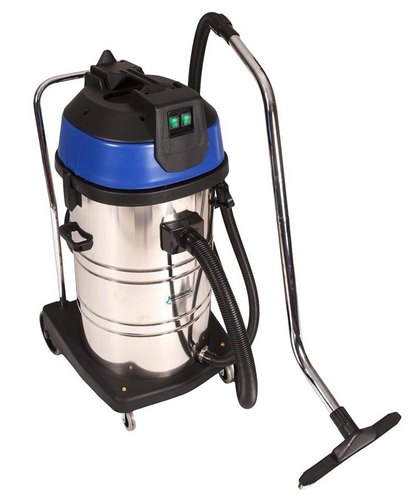
Industrial Vacuum Cleaners
Industrial vacuum cleaners are robust, high-performance cleaning machines designed to collect large volumes of dust, debris, liquids, and hazardous materials in commercial and industrial environments. Unlike domestic vacuum cleaners, they feature more powerful motors, larger collection capacities, superior filtration systems, and durable construction to withstand continuous, heavy-duty use and address specific industrial challenges like fine dust, explosive materials, or hazardous waste.
Types of Industrial Vacuum Cleansers
By Power Source:
Electric (Corded): Most common, powered by standard AC electricity.
Battery-Powered: Offers portability and freedom from cords, suitable for remote areas or where power outlets are limited.
Pneumatic/Compressed Air-Powered: Operated by compressed air, often used in hazardous environments where electricity is a risk (e.g., explosive atmospheres).
Engine-Powered: For large outdoor areas or applications requiring extreme suction and no access to electricity.
By Waste Type:
Dry Vacuum Cleaners: For collecting dust, powders, and solid debris.
Wet/Dry Vacuum Cleaners: Capable of collecting both dry materials and liquids.
Oil & Chip Vacuums: Specifically designed to collect metal chips mixed with cutting fluids/oils.
Hazardous Dust Vacuums (HEPA/ATEX certified): For capturing very fine, toxic, or combustible dusts (e.g., asbestos, pharmaceutical powders, explosive dusts).
By Filtration System:
Standard Filtration: For general dust and debris.
HEPA (High-Efficiency Particulate Air) Filtered: Captures 99.97% of particles 0.3 micrometers in size, essential for fine dust and health-sensitive applications.
ULPA (Ultra-Low Penetration Air) Filtered: Even finer filtration than HEPA.
Cyclonic Separation: Uses centrifugal force to separate large particles before they reach the main filter, extending filter life.
By Mobility/Size:
Portable/Backpack Vacuums: Smaller, lightweight units for confined spaces or stairs.
Upright/Canister Vacuums: Medium-sized, often with wheels for maneuverability.
Walk-Behind & Ride-On Vacuums: Larger, self-propelled units for vast floor areas.
Central Vacuum Systems: Fixed systems with piping running to multiple suction points, often with a large central collection unit.
Applications in Various Industries:
Manufacturing: Cleaning production floors, machinery, collecting metal chips, sawdust, fine powders (e.g., food, chemical, pharmaceutical).
Construction: Dust control (concrete dust, drywall dust), debris removal.
Pharmaceuticals & Biotechnology: Cleanroom cleaning, hazardous dust collection, preventing cross-contamination.
Food Processing: Cleaning production lines, collecting food particles and spills.
Automotive: Cleaning workshops, detailing vehicles, collecting metal shavings.
Warehousing & Logistics: Floor cleaning, general debris removal.
Textile Industry: Lint and fiber collection.
Mining: Dust control.
Technology:
High-Power Suction Motors: Industrial-grade motors (universal, bypass, brushless) designed for continuous duty and high airflow/suction.
Multi-Stage Filtration: Pre-filters, main filters (cartridge, bag), and HEPA/ULPA safety filters for comprehensive dust capture.
Filter Cleaning Systems: Manual (shaker) or automatic (reverse-pulse jet) systems to clean filters without disassembling.
Liquid Shut-off Mechanism: For wet vacuums, a float system that stops suction when the tank is full to prevent motor damage.
Antistatic & Explosion-Proof Design (ATEX certified): For hazardous areas, using static-dissipative materials and components to prevent ignition of combustible dusts or vapors.
Collection Systems: Large capacity tanks (steel or plastic), sometimes with continuous bagging systems for easy disposal.
Ergonomic Design: For operator comfort and maneuverability.
Noise Reduction: Designs to minimize operational noise.
Material Selection Considerations:
Housing/Tank:
Filters: