
HOTLINE: +91 851-114-2701
1 listings from verified sellers across India
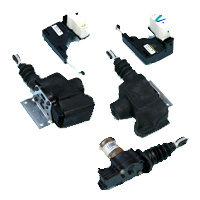
Actuators
An actuator is a mechanical device that converts energy (electrical, hydraulic, pneumatic, or manual) into mechanical motion. It operates a mechanism or system by causing a change in position or state, typically by controlling a valve, damper, or other industrial device.
Types of Actuators
Electric Actuators:
Use an electric motor to generate torque.
Rotary Actuators: Produce rotary motion (e.g., for ball valves, butterfly valves).
Linear Actuators: Produce linear motion (e.g., for gate valves, dampers).
Multi-turn Actuators: For valves requiring multiple turns (e.g., gate valves).
Quarter-turn Actuators: For valves requiring 90-degree rotation (e.g., ball, butterfly valves).
Pneumatic Actuators:
Use compressed air to generate motion.
Rack & Pinion: Converts linear motion of a piston into rotary motion.
Scotch Yoke: Converts linear motion into rotary motion, often for larger torques.
Diaphragm: For linear motion, often used in control valves.
Hydraulic Actuators:
Use pressurized hydraulic fluid to generate motion, typically for high-force applications.
Cylinder (Linear): For linear pushing/pulling forces.
Rotary: For rotary motion.
Manual Actuators:
Operated by hand (e.g., handwheels, levers), simple and reliable but require human intervention.
Solenoid Actuators:
Electrically operated, fast-acting linear motion, common in small valves.
Smart/Intelligent Actuators:
Incorporate microprocessors, communication capabilities (e.g., Foundation Fieldbus, Profibus, Modbus), and diagnostic functions.
Applications in Various Industries
Process Control: Widely used to operate valves (flow control, shut-off), dampers, and gates in chemical, petrochemical, oil & gas, power generation, water treatment, and food & beverage industries.
Robotics: Providing motion for robotic arms, grippers, and other components.
Automotive: Power windows, seat adjusters, engine control components.
Aerospace: Flight control surfaces, landing gear.
HVAC: Controlling airflow in ducts, opening/closing vents.
Manufacturing: Automation of various machinery, material handling.
Technology:
Electric: Motors (AC/DC), gearboxes, limit switches, position feedback sensors (potentiometers, encoders), control boards.
Pneumatic/Hydraulic: Cylinders, pistons, seals, springs (for spring-return), control valves (solenoid valves) to direct fluid flow.
Control Systems: Integration with PLCs, DCS (Distributed Control Systems), SCADA systems for automated operation, remote control, and monitoring.
Feedback: Provides real-time position feedback to the control system.
Material Selection Considerations