HOTLINE: +91 851-114-2701
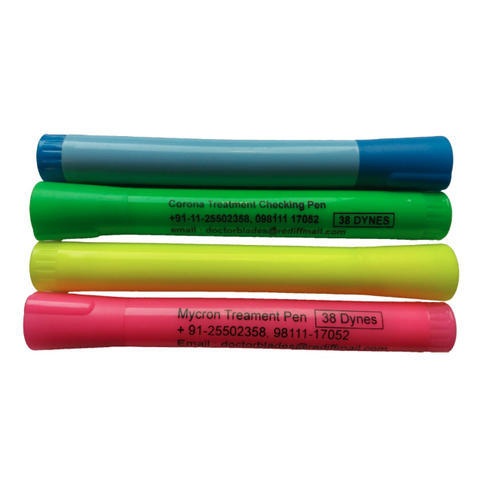

• Apply the mark over a test area of approximately 2 inch long
• Note the required time for the applied marking to break into droplets and/or peripheral shrinkage to occur
• Read the solution behavior by observing the center area of the applied mark
• If the dyne solution does not break into droplets and/or peripheral shrinkage after 4 seconds repeat the test with the next higher surface tension solution
• If the solution breaks into droplets and /or peripheral shrinkage in less than 4 seconds, repeat test with next lower surface tension solution
• Do not repeat test on the same area of material
• Repeat Steps 1 and 2 until the correct dyne level is determined
• The correct dyne level will be equal to the solution that holds for exactly 4 seconds before droplets or peripheral shrinkage occur
• As a general guideline surface coverage tension should be approximately 10 dynes higher than ink, adhesive or coating
• This may not be the case for every application
• Use of repetitive marking will result in a false reading
• Dyne Pens typically have a 6-12 month shelf life
• Each pen is rated for the minimum dyne level that the ink will determine
• Surface energy testing should be conducted immediately after treatment (Air plasma, flame plasma, chemical plasma, RF gas)
• Treated surfaces are time sensitive and are affected by environmental conditions
• Such as temperature and humidity
• Do not touch or contaminate the surface to be tested
• Dirty surfaces lose their wettability; therefore clean test level area
• Do not use contaminated or outdated pens
• Store and use pens at room temperature
• The Pen should not be exposed to direct light
• Therefore keep them closed when not in use
• Also repeated ink exposure to air will alter the dyne levels
• Properly sealed pens prevent this from occurring
• Inconsistent or excessive pressure may provide a false dyne level reading
| Brand Name | Eco Friends Doctor Blades |
| Model | ITB-3F13CE0E |
| Condition | New |
| Unit Type | Nos |
| Minimum Order Quantity | 1 |
| Minimum Ordered Packs | 1 |
| Country of Origin | India |
| Taxes | Inclusive of Tax |
| Ships from | New Delhi |
| Shipping | Product eligible for free shipping |
| Returnable | 7 Days Return |
| Warranty Type | Manufacturer / Seller |
| Warranty | Not Applicable |
• Apply the mark over a test area of approximately 2 inch long
• Note the required time for the applied marking to break into droplets and/or peripheral shrinkage to occur
• Read the solution behavior by observing the center area of the applied mark
• If the dyne solution does not break into droplets and/or peripheral shrinkage after 4 seconds repeat the test with the next higher surface tension solution
• If the solution breaks into droplets and /or peripheral shrinkage in less than 4 seconds, repeat test with next lower surface tension solution
• Do not repeat test on the same area of material
• Repeat Steps 1 and 2 until the correct dyne level is determined
• The correct dyne level will be equal to the solution that holds for exactly 4 seconds before droplets or peripheral shrinkage occur
• As a general guideline surface coverage tension should be approximately 10 dynes higher than ink, adhesive or coating
• This may not be the case for every application
• Use of repetitive marking will result in a false reading
• Dyne Pens typically have a 6-12 month shelf life
• Each pen is rated for the minimum dyne level that the ink will determine
• Surface energy testing should be conducted immediately after treatment (Air plasma, flame plasma, chemical plasma, RF gas)
• Treated surfaces are time sensitive and are affected by environmental conditions
• Such as temperature and humidity
• Do not touch or contaminate the surface to be tested
• Dirty surfaces lose their wettability; therefore clean test level area
• Do not use contaminated or outdated pens
• Store and use pens at room temperature
• The Pen should not be exposed to direct light
• Therefore keep them closed when not in use
• Also repeated ink exposure to air will alter the dyne levels
• Properly sealed pens prevent this from occurring
• Inconsistent or excessive pressure may provide a false dyne level reading