HOTLINE: +91 851-114-2701
Wheel Alignment Machine
A wheel alignment machine measures and adjusts the geometric angles of vehicle wheels (toe, camber, caster) so that they meet the manufacturer’s specifications. Proper alignment ensures safe handling, even tire wear, and better fuel economy
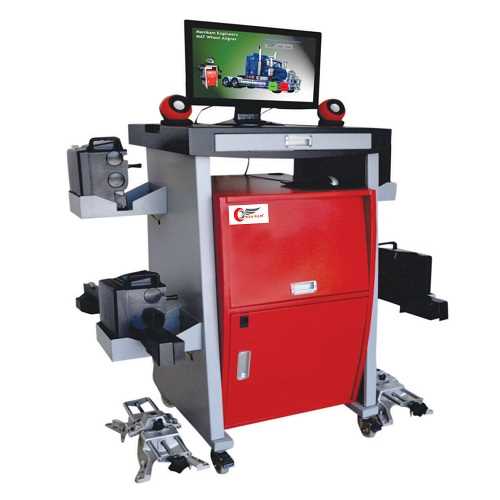
The machine uses sensors (lasers, cameras, or infrared) attached to each wheel to capture their orientation relative to the vehicle’s centerline. Software then calculates misalignments and guides the technician in making adjustments.
Type of Wheel Alignment Machine
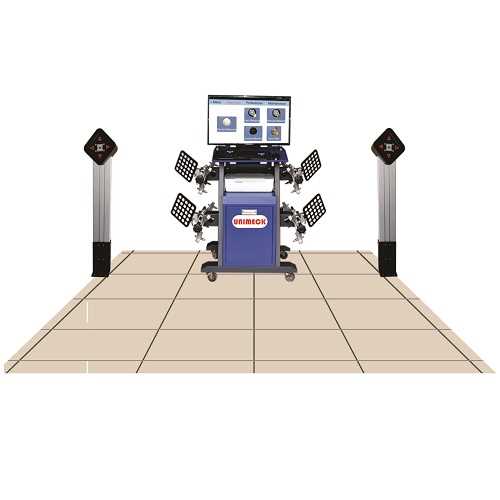
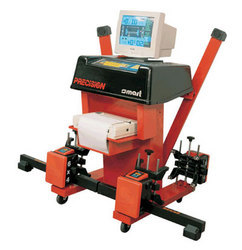
Modern wheel aligners include 2D/CCD machines, 3D imaging machines, and touchless (non-contact) systems. CCD aligners use cameras and targets on wheels to gather 2D angle data
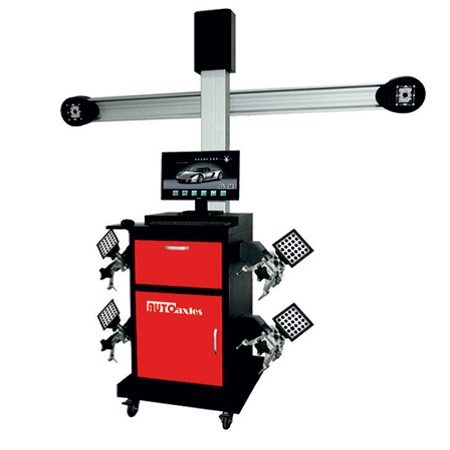
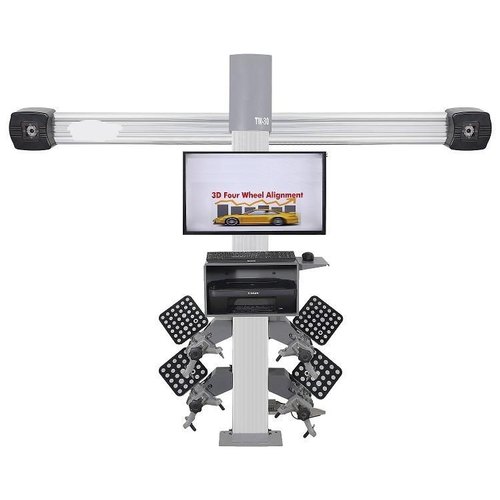
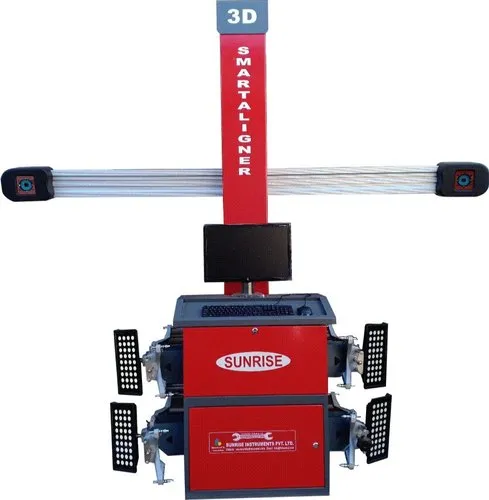
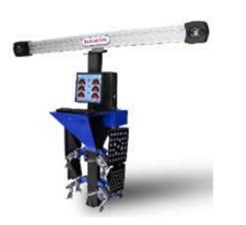
3D aligners use multiple cameras/lasers to capture full 3D wheel geometry, offering higher accuracy and easier visualization
Touchless systems use infrared cameras and sensors, requiring no physical targets on wheels. There are portable bench-top laser tools as well as fixed, full-elevator alignment bays. Software interfaces range from basic to advanced graphical systems.
Applications in Various Industries
Wheel aligners are used in auto repair shops, tire centers, and vehicle assembly plants. Any service dealing with suspension or tires (cars, trucks, heavy vehicles) needs alignment capability. In India’s automotive aftermarket, wheel alignment bays are standard in garages. Alignment machines handle vehicles from small cars to large trucks (adjusting toe/caster/camber on multiple axles).
Material Selection Considerations
The stand and frame are steel for stability. Wheel clamps and targets are often aluminum or steel with protective coatings. Reflector boards or targets (for lasers/CCD) use glass or aluminum backings. Electronic components (cameras, IR sensors) are enclosed in hard plastic or metal housings. Calibration poles/bars are aluminum. Wheels ramps/lifts are steel. Materials are chosen for precision (non-flexing), durability, and resistance to workshop dust and impact.
FAQ's
How long does an alignment take? A wheel alignment, whether for a two-wheel-drive or four-wheel-drive vehicle, takes an average of one hour under normal circumstances. It will take longer if the suspension system, steering bushing, track rod, or other parts have too much wear and tear or damage, as certain components will need to be replaced.
Do I need a 2 wheel or 4 wheel alignment? The front wheels are aligned with two-wheel alignment, while all four wheels are aligned with four-wheel alignment. Unless the vehicle has been in an accident and the rear axle has been bent out of alignment, causing the vehicle to the dog track, the latter is usually not needed on a large SUV or truck with a solid rear axle.
How much does a wheel alignment machine cost? Regularly checking your wheel alignment will extend the life of your tires and improve fuel efficiency due to lower rolling resistance with the ground, saving you money at the pump.