
HOTLINE: +91 851-114-2701
15 listings from verified sellers across India
.jpg)
.jpg)

.jpg)

.png)
.jpg)
.jpg)
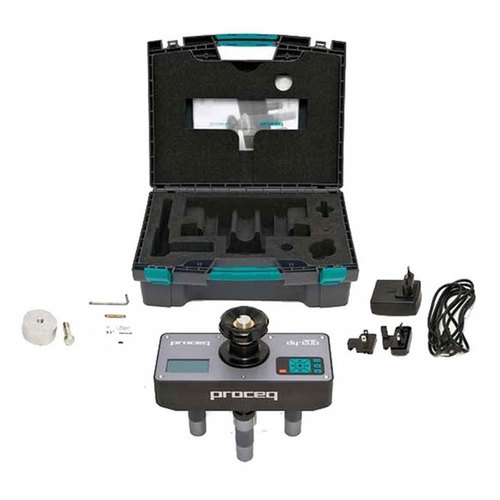
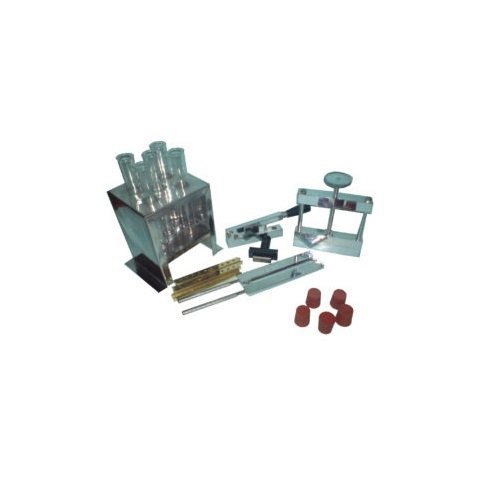
Adhesion Testers
Adhesion testers are instruments used to quantify the bond strength between two surfaces, or between a coating and its substrate. They are crucial for quality control, research and development, and ensuring the durability and performance of various materials and assemblies. The principle often involves applying a controlled force to detach a material from a surface and measuring the force required for failure.
Types of Adhesion testers
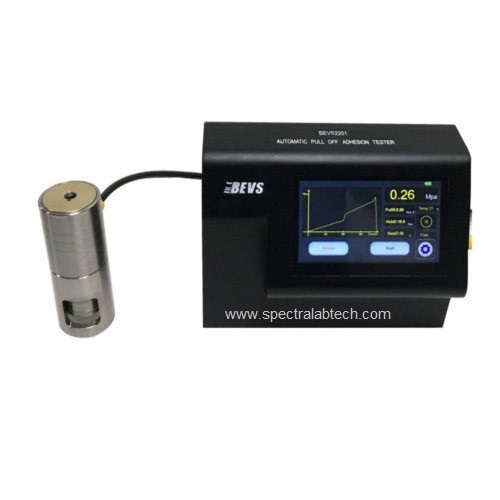
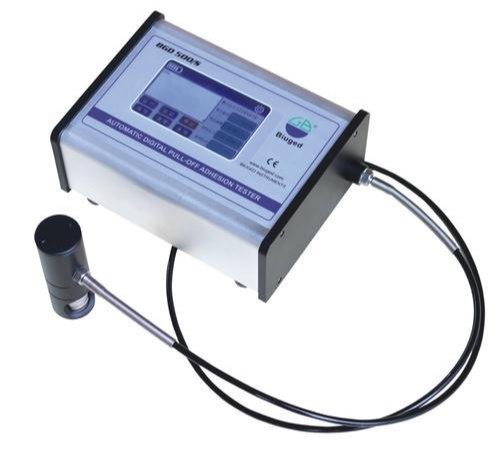
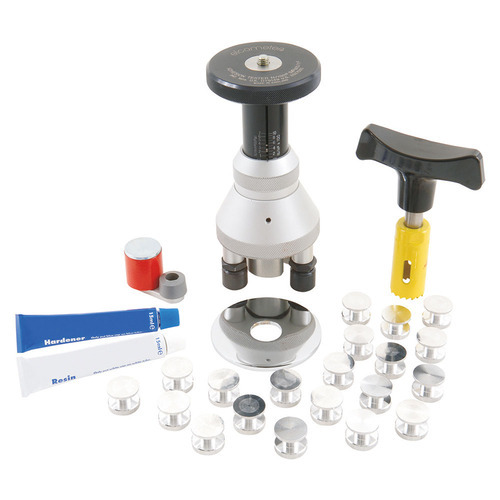
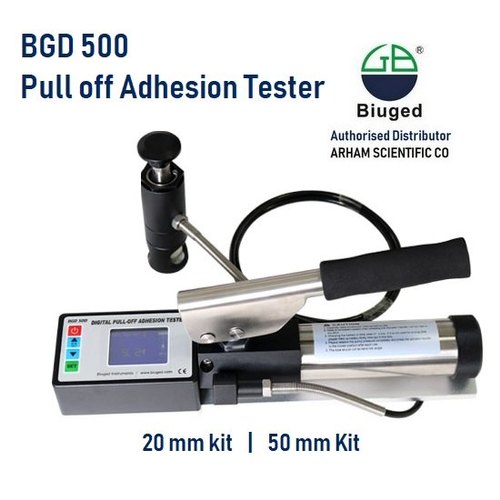
Pull-off Adhesion Testers: These are the most common type, where a dolly (a small fixture) is glued to the coating surface, and a tensile force is applied perpendicular to the surface until the coating detaches. The force at which detachment occurs is measured.
Cross-Cut Adhesion Testers: A series of cuts are made in the coating in a lattice pattern using a specialized tool. Adhesive tape is then applied over the cuts and rapidly removed. The adhesion is assessed visually by comparing the amount of coating removed to a standardized scale.
Scratch Adhesion Testers: A loaded stylus is drawn across the coated surface. The load at which the coating is scratched or removed indicates its adhesion.
Peel Adhesion Testers: Measure the force required to peel a flexible material (like tape or film) from a substrate at a specified angle (e.g., 90° or 180°).
Shear Adhesion Testers: Measure the force required to slide one surface over another when they are bonded together, often used for adhesives.
Applications in Various Industries
Coatings Industry: Critical for paints, varnishes, powder coatings, and thin films on various substrates (metal, wood, plastic). Ensures longevity, protection, and aesthetic quality.
Automotive Industry: Testing adhesion of automotive paints, sealants, adhesives for structural bonding, and interior trim.
Aerospace Industry: Crucial for bonding composite materials, aircraft coatings, and structural adhesives where high reliability is paramount.
Construction Industry: Assessing adhesion of concrete coatings, sealants, tile adhesives, and waterproofing membranes.
Electronics Industry: Testing adhesion of solder masks, circuit board coatings, and adhesive bonds in electronic components.
Medical Devices: Evaluating adhesion of biocompatible coatings on implants, surgical adhesives, and medical tapes.
Packaging Industry: Assessing seal strength in flexible packaging, labels, and laminates.
Advanced Technology: Integration with data acquisition systems, software for analysis, and compliance with international standards (ASTM, ISO, DIN). Some testers offer environmental chambers for testing under varying temperature and humidity.
Material Selection Considerations
Dolly Material (for Pull-off): Typically, aluminum or steel, chosen for their rigidity and ability to bond securely with the adhesive.
Adhesive for Dolly: Strong, fast-curing adhesives like epoxy or cyanoacrylate, compatible with the coating and substrate.
Tester Components: High-strength steels and aluminum alloys for structural components to ensure durability and accuracy. Precision-machined parts are essential for consistent force application.
Stylus Material (for Scratch Testers): Hard materials like hardened steel or diamond, depending on the coating hardness.
Calibration Standards: Reference materials with known adhesion properties for instrument verification.