
HOTLINE: +91 851-114-2701
4 listings from verified sellers across India
Gantry Cranes
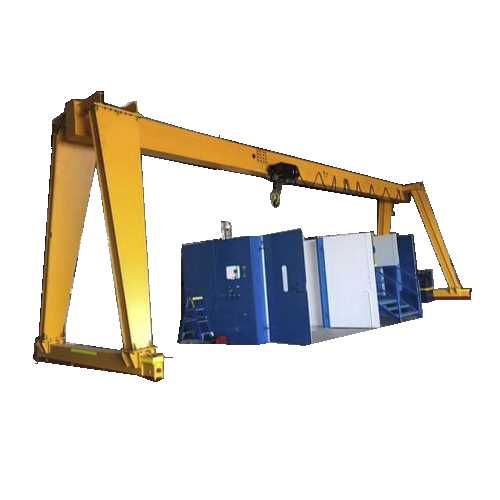
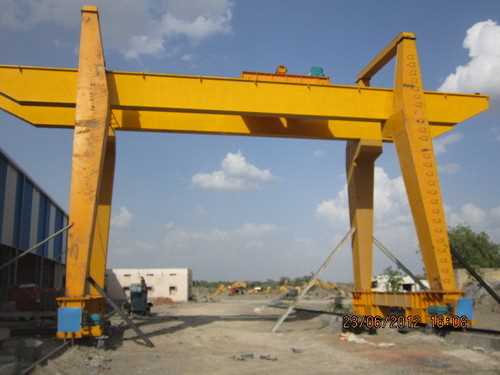
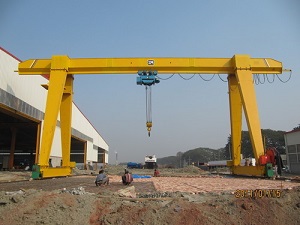
A type of overhead crane characterized by a bridge supported by two or more legs that run on wheels or rails directly on the ground. Unlike bridge cranes, they do not require a building structure for support, making them versatile for indoor and outdoor use. Goliath cranes are a specific type of gantry crane.
Types of Gantry Cranes
Full Gantry Cranes (Goliath Cranes): Both legs run on ground rails. Suitable for very heavy loads and large spans.
Semi-Gantry Cranes: One leg runs on a ground rail, the other on an elevated runway (often attached to a building column). Maximizes floor space.
Portable Gantry Cranes (A-Frame Gantry): Smaller, often on wheels, used for lighter loads and temporary lifting.
Adjustable Gantry Cranes: Height and/or span can be adjusted.
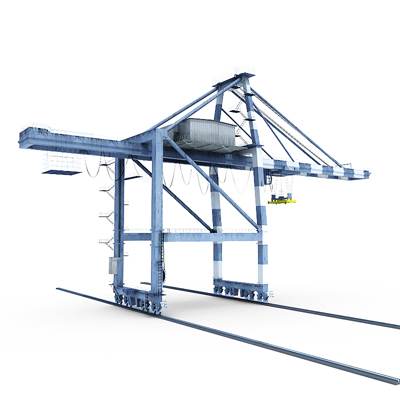
Container Gantry Cranes (RTG/RMG): Specialized for container handling in ports and intermodal yards.
Truss Gantry Cranes: Utilize a truss structure for the girder, often lighter for longer spans.
Applications in Various Industries
Manufacturing: Lifting and moving heavy components in factories, assembly lines.
Shipyards & Ports: Handling ship sections, containers.
Precast Concrete Industry: Moving large concrete elements.
Steel Mills: Handling steel coils, plates.
Construction Sites: Lifting structural components.
Warehousing & Logistics: Loading/unloading large items in outdoor storage.
Hydroelectric Dams: Gate lifting, maintenance.
Technology:
Structural Design: Engineered for high loads, wind resistance, seismic forces (if applicable).
Hoisting Mechanism: Wire rope hoists (single or double drum) for heavy lifting.
Trolley: Moves the hoist along the bridge girder.
Gantry Travel Drives: Electric motors with gearboxes and brakes for movement along the ground rails.
Variable Frequency Drives (VFDs): For smooth, precise control of all motions.
Safety Features: Limit switches, overload protection, anti-collision systems, storm anchors, wind speed sensors, emergency stops.
Remote Control & Cab Control: Operator interfaces.
Automation: Semi- or fully autonomous operation for specific applications (e.g., container handling).
Material Selection Considerations