
HOTLINE: +91 851-114-2701
4 listings from verified sellers across India
Portable Incinerator
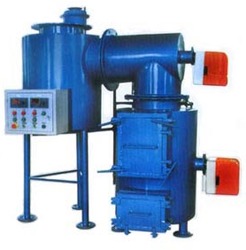
A portable incinerator is a compact, mobile unit designed for the controlled combustion of waste materials, typically at high temperatures, to reduce their volume, neutralize hazardous components, and eliminate pathogens. Unlike large, stationary incinerators, portable units offer flexibility for on-site waste management, particularly in remote areas, disaster zones, medical facilities, or during specific operations where transporting waste is impractical or risky. They are used for the safe disposal of various types of waste, including medical waste, general waste, animal carcasses, and certain industrial residues.
Types of Portable Incinerator
Batch-Load Incinerators: Waste is loaded into the chamber in batches, ignited, and allowed to burn completely before the next batch. Simplest design.
Continuous-Load Incinerators: Designed to accept waste continuously during operation, often with automated feeding systems. More common in larger portable units.
Fixed-Hearth Incinerators: Waste rests on a fixed grate during combustion.
Rotary Kiln Incinerators (Portable versions): A rotating cylindrical chamber that tumbles waste, providing efficient mixing and combustion, suitable for diverse waste types, including liquids and sludges.
Dual-Chamber Incinerators: Most modern portable incinerators feature two chambers. The primary chamber combusts the waste, and the secondary chamber (afterburner) combusts the volatile gases produced, ensuring cleaner emissions.
Medical Waste Incinerators (Portable): Specifically designed for pathological waste, sharps, and pharmaceutical waste, often requiring higher temperatures and more rigorous emission controls.
Animal Carcass Incinerators (Portable): For disposing of diseased or deceased animals, ensuring biosecurity.
Trailer-Mounted Incinerators: Units mounted on trailers for easy transport.
Applications in Various Industries:
Healthcare (Remote/Emergency): Hospitals, clinics, emergency response teams, disaster zones for safe disposal of biohazardous medical waste.
Agriculture: Farms, veterinary clinics for disposal of animal carcasses during disease outbreaks or regular operations.
Military & Disaster Relief: On-site waste management in field operations, humanitarian aid missions.
Remote Industrial Sites: Mining camps, exploration sites for general and potentially some hazardous waste.
Research & Labs: For secure disposal of biological waste.
Technology:
Dual-Chamber Combustion: Essential for efficient and environmentally compliant burning, ensuring complete combustion of gases and particulate matter.
Refractory Lining: High-temperature ceramic fiber or refractory bricks lining the combustion chambers to withstand extreme heat (up to 1200°C or 2200°F) and insulate the exterior.
Burners: Diesel or gas-fired burners for primary and secondary chambers to initiate and maintain high temperatures.
Forced Air Induction: Fans (blowers) to supply controlled amounts of primary and secondary air for efficient combustion.
Temperature Control & Monitoring: Thermocouples and control systems to monitor and maintain optimal combustion temperatures in both chambers.
Ash Removal Systems: Manual or automated systems for safe and efficient ash collection.
Pollution Control Systems (Optional/Advanced): Some larger portable units may include basic emission controls like scrubbers or baghouses for specific pollutants, though this adds complexity and reduces portability.
Mobility Features: Skid-mounted designs, trailer compatibility, forklift pockets for easy transport and deployment.
Safety Interlocks: Ensures safe operation, preventing access during high-temperature cycles.
Material Selection Considerations:
Combustion Chambers: